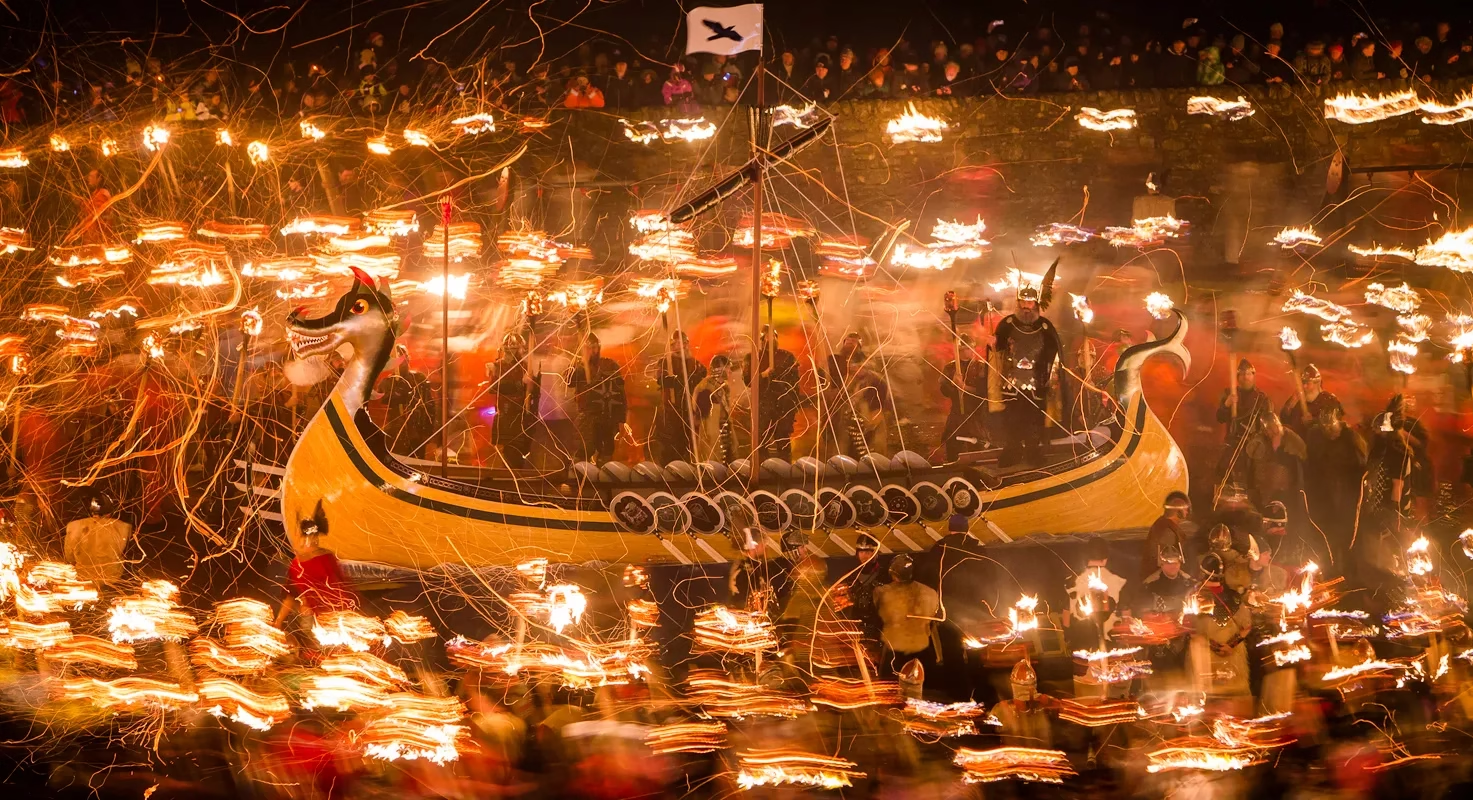
Up Helly Aa is a Viking fire festival held annually in Lerwick, the capital of Shetland, Scotland.
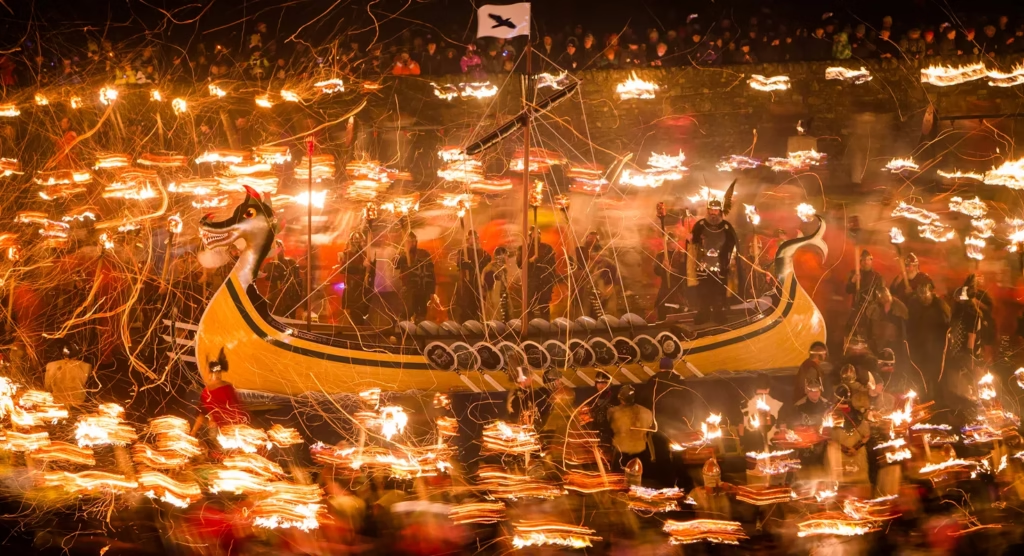
It celebrates Norse heritage, fire, and community spirit through a torch-lit procession, historical reenactments, and the burning of a Viking longship (called a galley).
- Held on the last Tuesday of January each year.
- The event involves over 1,000 torchbearers, known as guizers.
- The centerpiece is the Jarl Squad, led by a chosen “Guizer Jarl” — the chief Viking for the year.
History of Up Helly Aa
Norse Origins (8th–15th Century)
- The Shetland Islands were under Norse rule for centuries until they became part of Scotland in the 15th century.
- The islands have maintained strong Scandinavian cultural ties, evident in language, customs, and festivals.
19th Century — Birth of the Festival
- The roots of Up Helly Aa lie in the mid-1800s, when rowdy New Year’s celebrations by young men in Lerwick — including mischief with tar barrels — became unmanageable.
- To replace dangerous behavior with cultural celebration, the idea of a more organized festival emerged.
- By the 1870s, the community started organizing a formal torchlight procession.
- In 1881, the first official Up Helly Aa was held, complete with Viking costumes and the burning of a wooden galley.
Modern Festival Evolution
- Over time, the festival grew into a grand celebration of Shetland’s Viking ancestry.
- Now includes months of preparation, school visits, music, feasting, and community performances.
How Up Helly Aa is Celebrated Today
The Jarl Squad
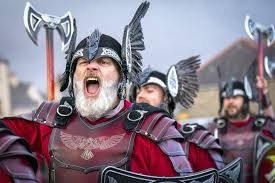
- The Guizer Jarl and his squad dress in elaborate Viking costumes, including helmets, axes, shields, and cloaks.
- They lead the procession, sing traditional Viking songs, and represent Norse heroes or themes chosen each year.
Torchlight Procession
- At nightfall, more than 1,000 torchbearers parade through Lerwick.
- They carry burning torches, chanting Viking songs while marching in formation.
Burning of the Galley
- The dramatic climax is when the squad places the wooden Viking ship (galley) in the center of the crowd.
- The torchbearers throw their torches into the galley, setting it ablaze in a fiery spectacle.
After-Parties and Halls
- After the burning, participants gather in local halls for traditional dances, skits, performances, and celebrations that last all night.
- It’s a community event — non-touristic, with visitors usually observing only the public portions.
Junior Up Helly Aa
- A children’s version of the festival takes place earlier in January, encouraging youth involvement.
Cultural Importance
- Celebrates Shetland’s Viking legacy and community pride.
- Entirely organized by locals — it’s a volunteer-run, community-based tradition.
- Maintains a non-commercial atmosphere — the festival is not designed for tourists.
Where Does It Happen?
- The main Up Helly Aa is in Lerwick, but over 10 smaller versions of the festival take place in other Shetland communities (e.g., Scalloway, Northmavine, Uyeasound) between January and March.
Interesting Facts
- Women historically could not participate in Lerwick’s main procession — though discussions and changes are evolving in smaller festivals.
- The Guizer Jarl is selected years in advance and helps design the galley, costumes, and theme.
Over 5,000 people attend, but accommodation in Shetland during the festival gets booked far in advance.