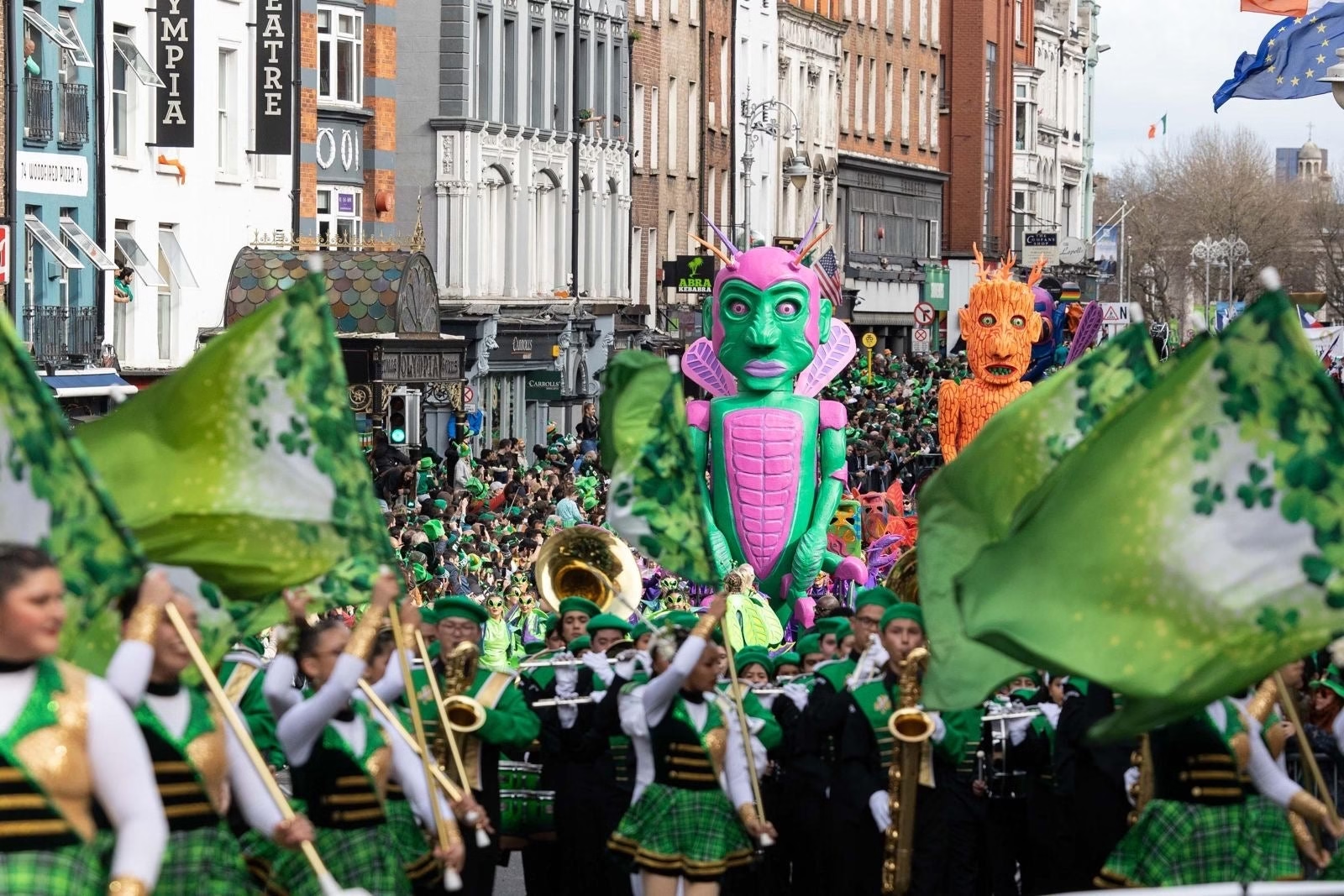
St. Patrick’s Day is a cultural and religious holiday celebrated annually on March 17th, honoring St. Patrick, the patron saint of Ireland. It started as a Catholic feast day and has evolved into a global celebration of Irish culture, heritage, and pride — marked by parades, wearing green, music, dance, food, and public festivities.
Who Was St. Patrick?
Early Life
- Born in Roman Britain (c. 385 AD), likely in present-day England, Scotland, or Wales.
- Real name possibly Maewyn Succat.
- At age 16, he was kidnapped by Irish raiders and sold into slavery in Ireland.
- Spent six years tending sheep in County Antrim or Mayo, during which he turned to prayer and Christianity.
Escape and Return
- Escaped back to Britain after hearing a divine voice.
- Trained as a Christian priest and bishop in France.
- Returned to Ireland as a missionary after a vision told him to convert the Irish to Christianity.
Legacy in Ireland
- Traveled extensively across Ireland preaching, baptizing, and founding churches.
- Used the three-leaf shamrock to explain the Christian Holy Trinity — Father, Son, and Holy Spirit.
- Credited with converting thousands of Irish pagans to Christianity.
- Died on March 17, 461 AD in Saul, Northern Ireland.
Myths and Legends of St. Patrick
| Myth | Explanation |
| Drove out all snakes from Ireland | Likely symbolic. Post-glacial Ireland never had snakes. This myth represents Patrick driving out “paganism.” |
| Used a shamrock | True — it was his teaching tool for explaining Christian beliefs. |
| Spoke to animals, performed miracles | Legends say he lit eternal fires and raised people from the dead. |
Origins of the Holiday
- Established in 1631 as a feast day by the Catholic Church.
- Observed as a holy day of obligation in Ireland for centuries.
- Initially a quiet, religious observance, especially in Ireland — involving church services, prayer, and family meals.
How It Became a National & Global Holiday
18th–19th Century: Irish Pride & Diaspora
- As British rule intensified, Irish people used St. Patrick’s Day as a symbol of nationalism and resistance.
- During the Great Famine (1845–1852), millions of Irish emigrated, especially to the United States, Canada, Australia, and Britain.
1762 – First Parade in New York City
- Organized by Irish soldiers in the British Army.
- Became a major celebration of Irish-American identity.
- New York and Boston grew into global hubs of St. Patrick’s Day parades.
Modern Celebrations in Ireland
- Once a religious-only day, Ireland began turning it into a public celebration in the 1990s to attract tourism.
- Dublin now hosts multi-day events, including:
- Grand parades
- Traditional music sessions
- Irish dancing (e.g., Riverdance)
- Light shows, food festivals, and family activities
- Grand parades
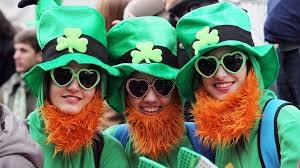
- Green clothing, face paint, shamrock pins, and even green beer are now commonplace.
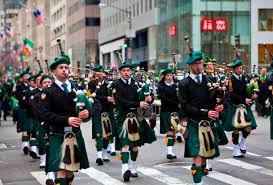
St. Patrick’s Day Around the World
| Country | Highlights |
| USA | Cities like New York, Boston, Chicago host huge parades. Chicago dyes its river green. Irish pubs are packed. |
| Canada | Montreal has one of the longest-running St. Patrick’s Day parades (since 1824). |
| Australia | Irish music, pub parties, and national landmarks lit green. |
| United Kingdom | Strong Irish communities celebrate with parades and pub events. |
| Global Landmarks | The “Global Greening” campaign lights up monuments green: Sydney Opera House, Colosseum, Niagara Falls, Eiffel Tower, etc. |
Symbols of St. Patrick’s Day
| Symbol | Meaning |
| ☘️ Shamrock | Trinity & Irish pride |
| 🟩 Green Color | The Emerald Isle, spring, Catholic tradition |
| 🧝 Leprechauns | Irish folklore about mischievous fairies with pots of gold |
| 🍻 Beer & Whiskey | Celebration, toasting Irish heritage |
| 🎩 Top hats & Celtic designs | Irish history and storytelling tradition |
Traditional Irish Foods
- Corned beef and cabbage (especially in the U.S.)
- Irish stew, soda bread, shepherd’s pie
- Guinness and Irish whiskey
- Boxty (potato pancakes), colcannon, and bangers & mash
Interesting Facts
- Pubs in Ireland were closed on March 17 until 1970.
- St. Patrick wasn’t Irish — he was British.
- St. Patrick’s Day is a public holiday in Ireland, Northern Ireland, and Montserrat (Caribbean).
- March 17 is also seen as a celebration of Irish language and cultural preservation.
Why Do People Celebrate It?
- Honor Irish culture and heritage
- Celebrate Christianity’s arrival in Ireland
- Reconnect with Irish roots, especially in the Irish diaspora
- Promote peace, unity, and celebration across cultures
Enjoy fun, music, dance, food, and community spirit